
The Winter Entryway Reset: A Mudroom Tidy-Up That Survives the Season
The Winter Entryway Reset: A Mudroom Tidy-Up That Survives the Season
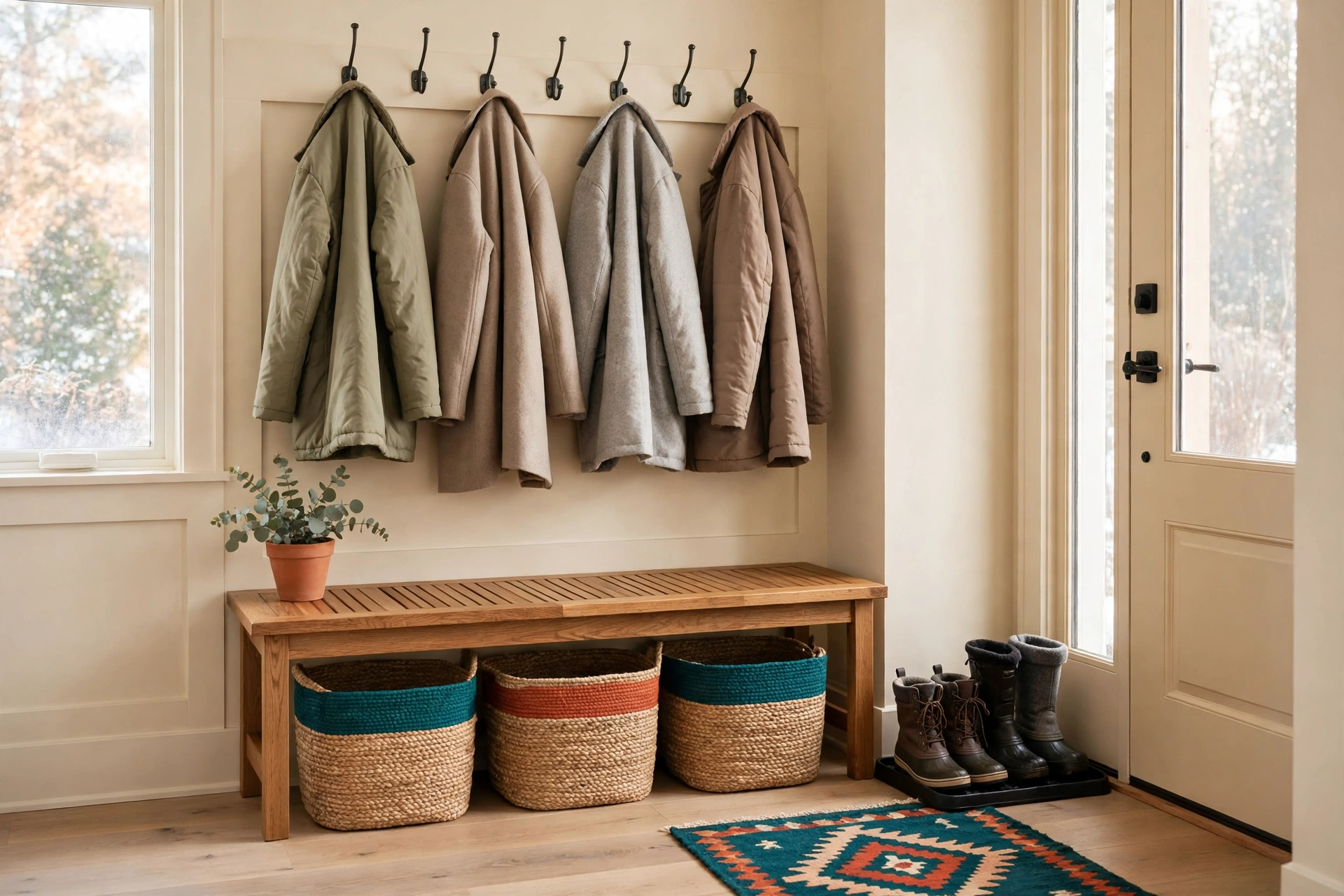
Every winter, the same scene plays out by the front door: a shoe avalanche spreading across the rug, coats draped over the banister, mittens appearing in places mittens should never be, and a gray tide of salt and slush creeping across the floor. The entryway is the smallest room in the house — and in winter, it takes the hardest beating. That is exactly why winter entryway organization deserves its own reset, separate from any room-by-room decluttering plan.
The good news: you don’t need a full mudroom addition to fix it. The system below is the bench + hooks + baskets formula — a zoned setup that works in a hallway corner, a rented apartment, or a generous mudroom, and it is built to survive the slushy, salty, coat-heavy months from December through March.
Why Entryways Fail in Winter (and What Actually Fixes Them)
Entryways fail in winter for one reason: volume. Wet gear multiplies what you need to store (boots AND shoes, heavy coats AND jackets, hats AND scarves AND gloves), while wetness shrinks the space that’s usable — everything damp needs to spread out, not stack up. Most organization advice treats the entryway like a pretty hallway; winter demands a working station.
Fresh seasonal guides all land on the same core ideas. DreamyHomeStyle’s entryway guide centers the “bench and hook combo” as the foundation (https://dreamyhomestyle.com/mudroom-entryway/); Livinator’s mudroom guide builds the whole concept around wet/dry zones so winter mess never migrates (https://livinator.com/mudroom-magic-make-entryways-work-harder/); Merry Maids’ mudroom organization guide takes a winter-cleaning angle throughout (https://merrymaids.com/blog/mudroom-ideas-organization); AllRD’s winter mudroom makeover shows the concept rebuilt specifically for cold-weather gear (https://allrd.com/project/mudroom-makeover-for-a-functional-winter/); and Murphy’s Oil Soap’s mudroom ideas frame the whole mission as “keep the winter outside” (https://www.murphyoilsoap.com/murphy-home-care/mudroom-ideas). No entryway blog exists on Clutter & Calm yet — so here is our complete version, built on their best thinking.
The Bench + Hooks + Baskets Formula
This is the entire system in three pieces. Get these right and 80% of entryway chaos disappears:
- Bench: the sit-down zone for putting on boots — and the visual anchor of the whole setup. One bench (even a narrow one) gives the entryway a purpose. If you have space underneath, that’s where baskets live.
- Hooks: the fast-grab zone. Coats, bags, and dog leashes hang here — nothing ever hits the floor or the banister. Wall hooks are the highest-value square foot in a winter entryway.
- Baskets: the catch-all zone for the small stuff that migrates — mittens, scarves, hats, sunscreen, umbrellas. Labeled baskets turn “toss it in the corner” into “toss it in the right basket.”

The magic is that each piece has one job and nothing overlaps. Bench = sit + storage under. Hooks = hanging, one per person. Baskets = small loose items, one per category. When everything has exactly one home, the reset runs itself — even with kids.
One Hook Per Person (the Non-Negotiable)
Assign one sturdy hook per person — and label them if the household needs it (kids’ names on hooks end the “whose coat is on the floor” argument permanently). The rules:
- Each person’s hook holds their current winter coat and today’s bag only.
- Out-of-season coats live elsewhere (closet, storage). The entryway is a working station, not a coat museum.
- When a new coat comes in, the old one moves out — this is the one-in-one-out rule at hook level (more on that below).
If you have fewer hooks than people, that’s your signal to declutter the entryway’s overflow first — the extras are the clutter, not the missing hooks.
Wet/Dry Zones: Keep the Winter Outside
This is the zoning concept from Livinator’s mudroom guide (https://livinator.com/mudroom-magic-make-entryways-work-harder/), and it is the single most important winter idea in this post. Divide the entryway into two zones:
- The wet zone: the strip right inside the door — boot tray, double doormats, nothing fabric. This zone is allowed to look messy; its job is to contain mess. Murphy’s Oil Soap’s mudroom philosophy says it best: “keep the winter outside” (https://www.murphyoilsoap.com/murphy-home-care/mudroom-ideas).
- The dry zone: everything past the wet strip — the bench, the hooks, the baskets, the rug you actually care about. Dry-zone items stay dry because the wet zone did its job.

The boundary can be as simple as a rug edge or a line of painter’s tape while you train the household. After a week, nobody thinks about it — boots go in the wet zone automatically.
Boot Trays + Double Doormats (the Winter Mess Kit)
Two cheap additions do more than any organizer bin:
- A boot tray under every pair of winter boots. Raised edges catch meltwater and salt; a tray with a lip you can hose off in the tub keeps the floor underneath spotless. One tray per active boot pair — not one tray for the whole family’s abandoned footwear.
- Double doormats — a coarse outdoor mat outside the door, plus an absorbent washable runner just inside. The first mat scrapes; the second mat absorbs. In slush season, this pair is the difference between a tidy entryway and salt stains spreading into the hallway.
Maintenance note: shake the outdoor mat weekly and wash the indoor runner monthly through winter. A 5-minute wipe-down of the boot trays keeps the wet zone from becoming the gross zone.
The Coat One-In-One-Out Rule
Winter entryways don’t fill up with things — they fill up with coats. The one-in-one-out rule stops the coat creep cold: every new coat (or jacket, vest, or heavy layer) that enters the entryway must trigger one outgoing move. A coat goes to the closet, to donation, or to storage — but the hook count never grows.
This pairs naturally with our One In, Ten Out rule for small spaces: for coats specifically, one-in-one-out is the honest math. Nobody wears six winter coats. The extras are clutter wearing fabric.
Rental-Friendly: All of This Works Without Drilling
No mudroom, no drilling rights? The whole formula adapts:
- Bench: any sturdy bench or storage ottoman works — bonus if it has a lid for hidden basket storage.
- Hooks: over-the-door hook racks and heavy-duty adhesive hooks hold a winter coat just fine. A freestanding coat rack is the zero-commitment option.
- Baskets: basket tower or a small bookshelf does the same job as under-bench storage.
- Wet zone: a washable runner + boot tray needs no installation at all — just floor space.
The system is about zones and habits, not carpentry. Renters can run the exact same reset.
Keep It Calm All Season: the Weekly Entryway Sweep
A winter entryway reset only survives if it gets light maintenance. Borrow the 10-minute rhythm from our Weekly Reset Ritual: once a week, run a 5-minute entryway sweep — shake the mats, wipe the boot trays, return wandering mittens to their labeled baskets, and evict any coat that has been hanging for a month unworn. Five minutes a week beats a February avalanche every time.
And if your entryway has started doubling as a decor zone, borrow the styling eye from our Curated Clutter guide: one intentional vignette on the bench or shelf (a candle, a small plant, one framed print) makes the entryway feel designed instead of merely functional — as long as the vignette stays in the dry zone and never competes with the wet gear.
Get the Free Printable: Entryway Zone Planner
Want the whole winter entryway organization system on one sheet? Our free Entryway Zone Planner printable maps the bench + hooks + baskets layout, gives you a one-hook-per-person assignment chart, the wet/dry zone boundary checklist, and the weekly 5-minute sweep routine — sketch your own entryway onto it and put it where the household will see it.
Join our newsletter and we’ll send the printable straight to your inbox — plus one calm, useful home tip each week. No spam, ever; unsubscribe anytime.

Frequently Asked Questions
What is the bench + hooks + baskets formula?
It’s the three-piece winter entryway system: a bench as the sit-down zone and visual anchor (with basket storage underneath), one sturdy hook per person for coats and bags, and labeled baskets for small loose items like mittens and scarves. Each piece has exactly one job — sit, hang, or contain — so gear never ends up on the floor. It works in rentals too, with freestanding and adhesive alternatives.
What are wet and dry zones in an entryway?
Wet/dry zoning — from Livinator’s mudroom guide — divides the entryway at the door. The wet zone (boot tray + double doormats, nothing fabric) contains slush, salt, and meltwater; the dry zone (bench, hooks, baskets, the rug you care about) stays clean. The boundary can be as simple as a rug edge, and after about a week the household follows it automatically.
How do I organize an entryway in a rental?
Use no-drill versions of the same system: an over-the-door hook rack or freestanding coat rack instead of wall hooks, a storage ottoman or any bench, a basket tower instead of built-ins, and a washable runner plus boot tray for the wet zone. The system is about zones and habits, not carpentry — renters can run the identical reset.
What is the coat one-in-one-out rule?
Every new coat or heavy layer that enters the entryway must trigger one outgoing move — a coat goes to the closet, donation, or storage. The hook count never grows. Winter entryways fill up with coats more than anything else, so this one rule stops the coat creep that buries the whole system by February.
How do I keep the entryway organized all winter?
Run a 5-minute weekly sweep: shake the mats, wipe the boot trays, return wandering small items to their labeled baskets, and evict any coat unworn for a month. It borrows the rhythm of our Weekly Reset Ritual — five minutes a week beats a February avalanche every time.





One Comment