

Thrift-Flip Organization: 15 Secondhand Finds That Organize Your Home on a Budget
Organizing aisles sell you $40 “systems” in matching plastic. The thrift store sells you the same function for $4 — and it looks better.
This is not news to Pinterest. In its 2026 Hobbies Trend Report, Pinterest flagged “Secondhand Sidequest”: thrift shopping is turning into a treasure hunt, with searches for “thrift flip ideas” up 610% and “repair aesthetic” up 167% (visible mending, patchwork add-ons, crochet upcycles). One important nuance: that report is fashion-led — but retail coverage of the same data notes that “searches for home-related thrift inspiration are on the rise,” with the secondhand movement now spanning “furniture, interiors, and home appliances.” The home bridge is real. Thrift-flip creators are already recreating viral 2026 design trends for under $20 using thrifted finds, paint, and basic craft supplies (Canterbury Cottage, 2026).
Thrift-flip organization means one thing in our house: organize with secondhand finds instead of buying new systems. Here are the rules that keep it on-brand, then the 15 finds that actually work.
The Rules: Declutter First, Shop Second
Thrift-flipping replaces disposable organizers and fills real gaps — it is not an excuse to haul home more stuff.
- One-in, one-out applies to thrifted finds too. Run every purchase through the OHIO method the moment it crosses your door: it gets a home immediately or it doesn’t stay.
- Buy the boring version. Plain baskets and jars get used. Quirky one-offs become clutter again within a month.
- Audit before you hunt. Declutter the target zone first — measure shelves, count what needs containing, and bring a list. Thrift stores reward the prepared.
The 15 Thrifted Finds That Actually Organize

Baskets & Bins
1. Seagrass and wicker baskets. The thrift-store staple. They warm up shelves, closets, and pantries instantly, and they cost $3–6 instead of $18. Stack two on a closet shelf and you’ve got instant categories.
2. Lidded storage bins. Seasonal decor, paperwork, linens — lids make them stackable and dust-proof. Check that the lid actually fits before you buy; orphan bins are just future donations.
3. Small handled baskets. The unsung hero of pantry and under-sink zones. Corral spice packets, cleaning sachets, and small bottles into lift-out groups — pull one basket instead of excavating a cabinet. (Our kitchen declutter checklist pairs perfectly with a basket re-zone.)
Glass Jars & Canisters
4. Glass jars for pantry decanting. Uniform jars turn a chaotic pantry into a calm one. Match by shape, not brand — a shelf of mixed-but-similar jars looks intentional and curated.
5. Canisters for the bathroom. Cotton rounds, bath salts, cotton swabs — decant them out of crinkly packaging into apothecary-style jars. Instant spa-bathroom energy for $2.
6. Small jars for craft and desk supplies. Buttons, paper clips, hair ties, bobby pins: the tiny things that migrate into junk drawers. One thrifted jar per category, labeled.

Trays
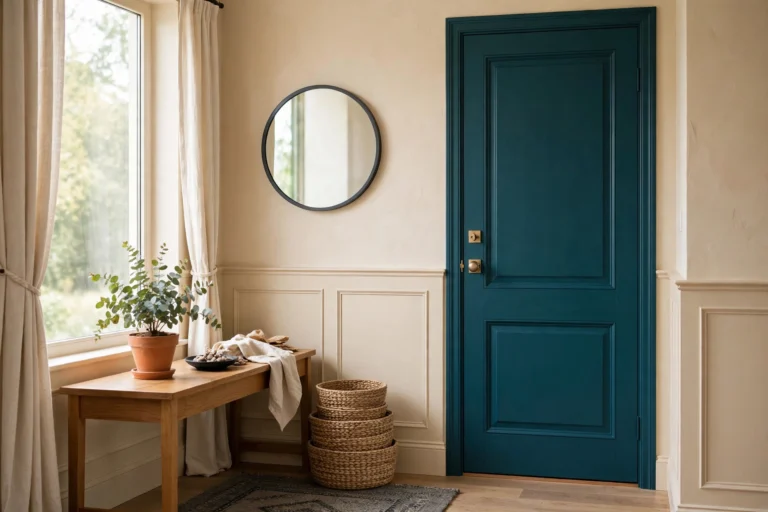
7. Wooden or metal trays for the entryway. Keys, sunglasses, mail — a tray turns a scatter zone into a landing zone. Look for trays with a rim so nothing slides off.
8. Serving trays for the bathroom and coffee station. Corral bottles on a vanity or mugs and sugar by the coffee maker. A single tray makes a group of items read as “styled” instead of “scattered.”
Wooden Crates & Boxes
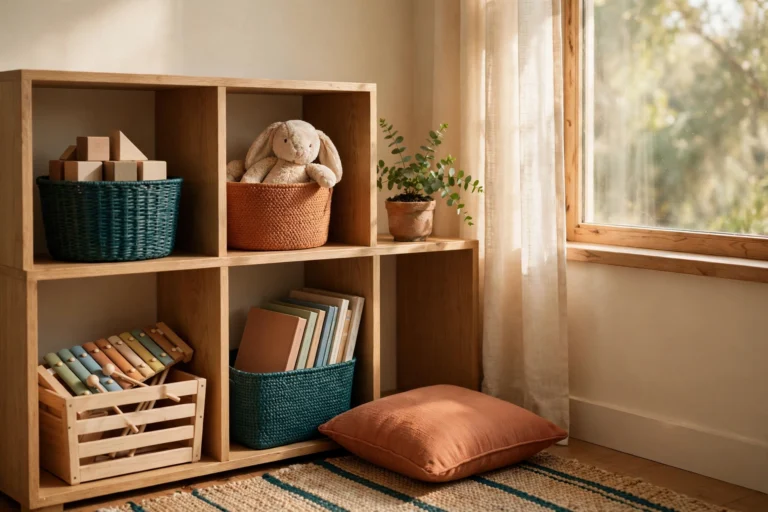
9. Wooden crates for under-sink and toy storage. Sturdy, stackable, and they take paint well. Line with a washable liner for under-sink use.
10. Labeled boxes for the linen closet and files. Matching boxes + a label maker = a linen closet that looks like a boutique hotel. Thrifted boxes in one material (wood, kraft, fabric) look deliberately curated — this is the curated clutter principle applied to storage itself.
Picture Frames
11. Frames as trays and organizers. Lay a deep frame flat and it becomes a tray for a vanity or desk. Add a magnetic sheet behind the glass and it’s a memo board. Pop out the glass and staple chicken wire inside for an earring organizer.
12. Frames as label holders and command centers. Small frames on bin fronts become chic label holders. A large frame with a painted chalkboard or dry-erase insert becomes a family command center — calendars, lists, reminders, all in one thrifted frame.
Small Furniture Flips
13. A thrifted stool or side table → a nightstand with storage. Small tables with a shelf or drawer are nightstand gold. Sand, paint in the palette, done — designer look, thrift price.
14. A dated dresser + a coat of paint → an entryway organizer. Short, wide dressers are perfect entryway pieces: top tray for keys, drawers for gloves, scarves, and dog gear. One coat of deep teal or warm white and nobody believes it was $25.
15. A vintage suitcase → under-bed or entryway storage. Stack two as a side table with hidden storage inside, or slide one under the bed for off-season clothes. Lined with cedar sachets, they’re as functional as they are charming.
The $20 Flip Method (Clean, Paint, Label, Style)
Every thrifted find gets the same four-step treatment before it earns a spot:
- Clean it. Hot soapy water, then a vinegar wipe for wood and glass. Never skip this — thrift stores are dusty.
- Paint it (if it needs it). One unifying color across mismatched finds makes a whole shelf look like a set. Stick to the palette: deep teal, warm white, natural wood.
- Label it. A label is what separates “organized” from “a bunch of baskets.” Chalk labels, a label maker, or framed tags — pick one style and repeat it.
- Style it once. Place it, step back, and remove one thing. Negative space is what makes thrifted collections look curated instead of crowded.

Your Free Thrift-Store Organization Hunt List
The difference between a great thrift run and a cart of regrets is a list. Our free Thrift-Store Organization Hunt List is a per-room checklist of exactly what to look for — basket sizes, jar types, tray shapes, furniture measurements — so you walk in with a plan and walk out with storage, not clutter. Grab it through the newsletter form below and print it before your next run.
Frequently Asked Questions
Is thrift-flip organization actually cheaper than buying new organizers?
Usually, yes — dramatically. A thrifted wicker basket runs $3–6 versus $15–25 new; glass jars are often under $1. Even with paint and labels, most flips land under $20 total, and creators are recreating full 2026 design trends at that price point (Canterbury Cottage, 2026).
What should I look for at thrift stores for home organization?
Baskets and bins (all sizes), glass jars and canisters, trays with rims, wooden crates and boxes, picture frames, and small solid-wood furniture. Bring measurements of your shelves and a per-room list — the free Hunt List printable above covers exactly this.
How do I make thrifted organizers look cohesive instead of mismatched?
Unify with one paint color, one label style, and one material repeated across the zone. A shelf of mixed baskets all in natural seagrass, or jars all with the same chalk labels, reads as intentional. That’s the curated-clutter rule: repetition is what turns a collection into a design choice.
Does the one-in-one-out rule apply to thrifted finds?
Absolutely — thrift-flipping replaces disposable organizers and fills real gaps; it’s not an excuse to accumulate. Run every find through the OHIO method the moment it comes home: it gets a permanent home immediately or it goes back.
What’s the “repair aesthetic” trend from Pinterest’s 2026 report?
Pinterest’s 2026 Hobbies Trend Report (“Secondhand Sidequest”) found searches for “thrift flip ideas” up 610% and “repair aesthetic” up 167% — techniques like visible mending (sashiko), patchwork add-ons, and crochet upcycles. For home organization, it translates to proudly visible, hand-finished storage: painted crates, labeled jars, mended baskets.
Sources & further reading
- Pinterest 2026 Hobbies Trend Report (“Secondhand Sidequest”): https://newsroom.pinterest.com/en-ca/news/2026-pinterest-hobbies-trend-report/
- Retail News Asia on the Gen-Z thrift revival and Pinterest data: https://retailnews.asia/gen-z-fuels-thrift-revival-pinterest-reports-soaring-interest-in-vintage-style
- Thrift-flip inspiration (video): https://www.youtube.com/shorts/i2StKmqzEEY


4 Comments