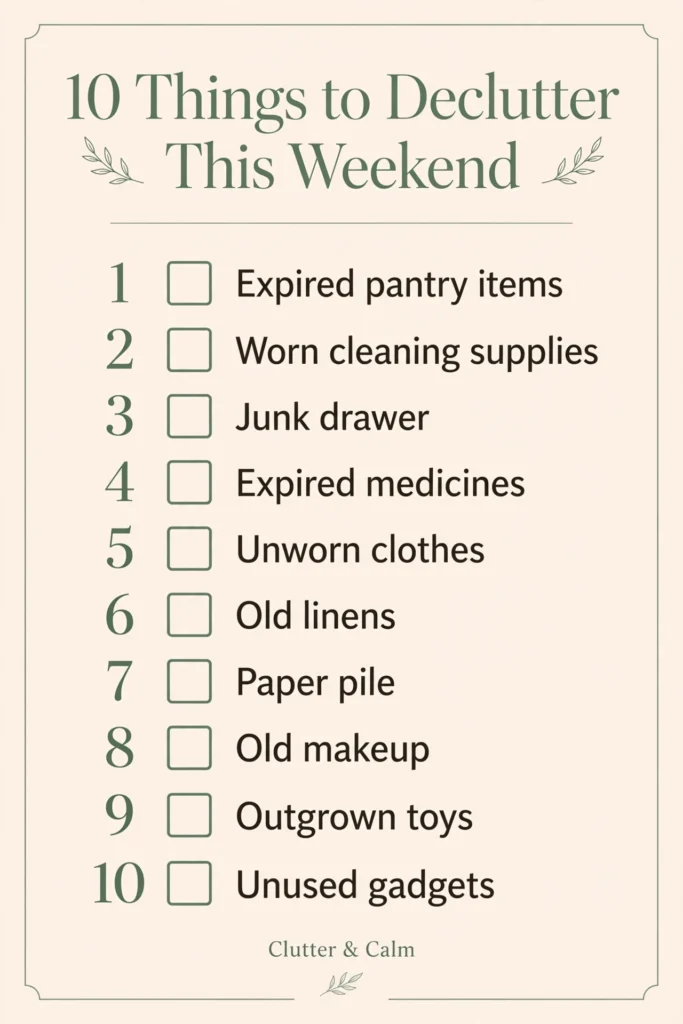
10 Things to Declutter This Weekend (Room-by-Room Checklist)
There’s a special kind of tired that has nothing to do with sleep. It’s the tired you feel when you walk into your kitchen and the counters are covered, when you open a drawer and something falls out, when every room has that low hum of stuff demanding your attention.
If that’s you right now, here’s the good news: you don’t need a full home makeover. You need one weekend and 10 smart targets.
This isn’t a “throw away everything you own” list. It’s a curated hit-list of the items that create 80% of the visual clutter in most homes — the expired, the broken, the duplicated, and the forgotten. Most of these take 15 minutes or less. By Sunday evening, your home will feel lighter. Let’s go.
How to Use This Checklist (The 15-Minute Rule)
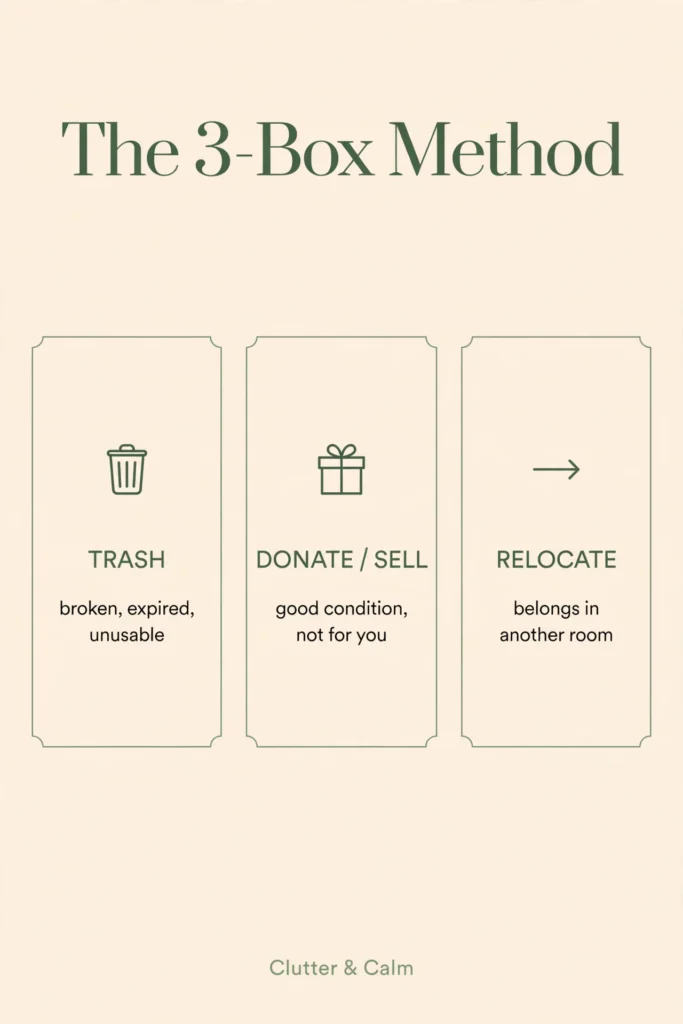
Before you start, grab three bags or boxes and label them:
- Trash — broken, expired, or genuinely unusable
- Donate/Sell — good condition, just not for you anymore
- Relocate — belongs in another room
Set a timer for 15 minutes per area. When it rings, you stop — even mid-drawer. This keeps decluttering from turning into an exhausting marathon that makes you quit. Small, finished wins beat ambitious, abandoned projects every time.
Tip: Put on a podcast or your favorite playlist. Decluttering goes twice as fast when your hands are busy and your mind is entertained.
1. Expired Pantry Items & Old Spices
Where: Kitchen pantry, spice rack
Time: 15 minutes
Pull everything out (yes, everything) and check dates. That baking powder from 2021? Dead. Spices older than a year have lost most of their flavor — give them the sniff test; if there’s no aroma, there’s no point.
Quick wins: Expired canned goods, stale crackers and chips, spice jars you can’t remember buying, duplicate condiments (three half-empty ketchups is two too many).
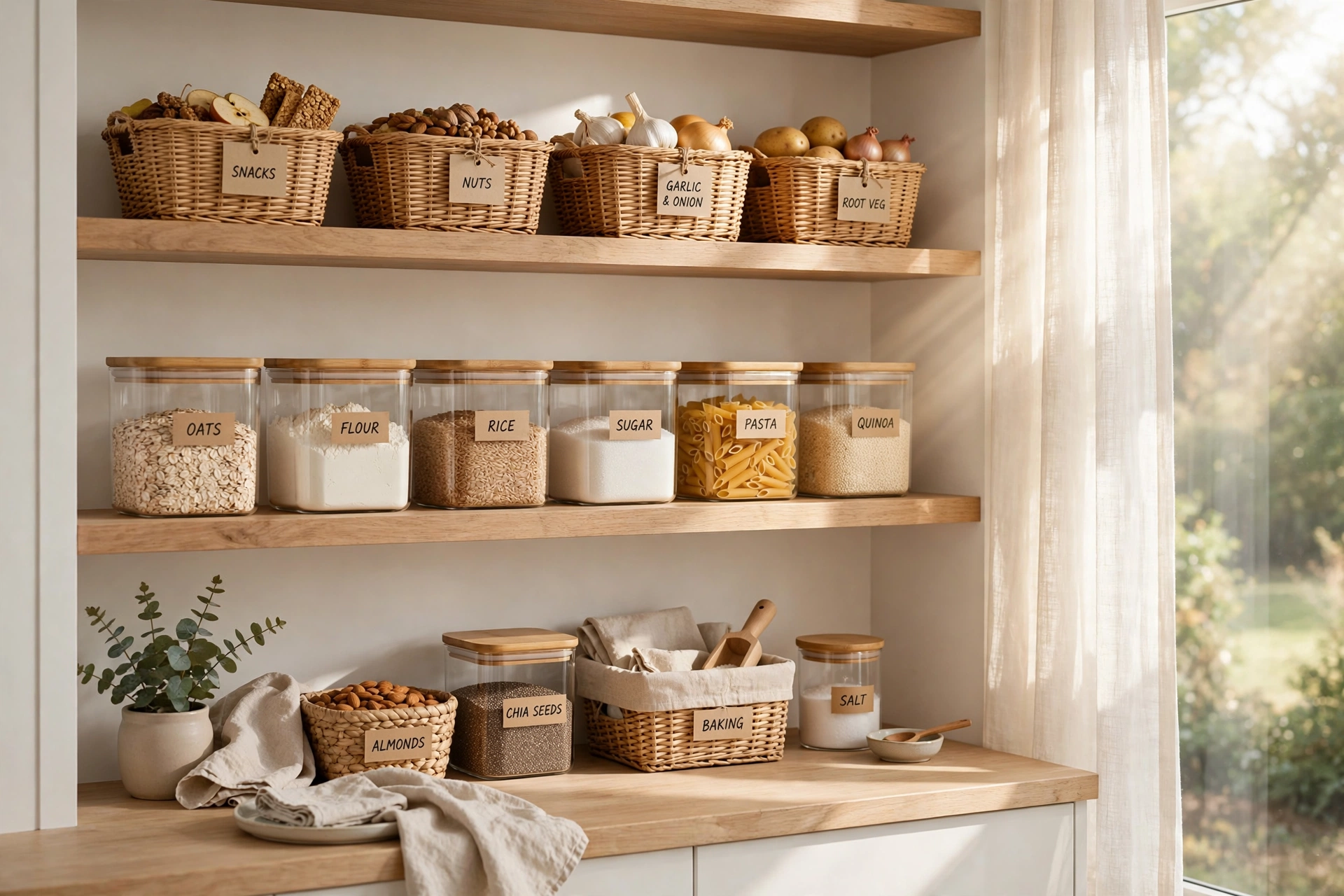
Small pantry organization on a budget — our full guide is coming soon and will show you how to set the pantry back up so it stays this way.
2. Worn-Out Cleaning Supplies
Where: Under the kitchen sink, laundry room
Time: 10 minutes
Here’s the irony: the things we use to clean often become clutter themselves. Old sponges harbor more bacteria than almost anything in your home — swap them monthly. Toss dried-out wipes, nearly-empty bottles you’ve already replaced, and any product you bought, hated, and will never use.
Keep only: One all-purpose cleaner, one bathroom cleaner, dish soap, and laundry basics. That’s genuinely all most homes need.
3. The Junk Drawer
Where: You know the one
Time: 15 minutes
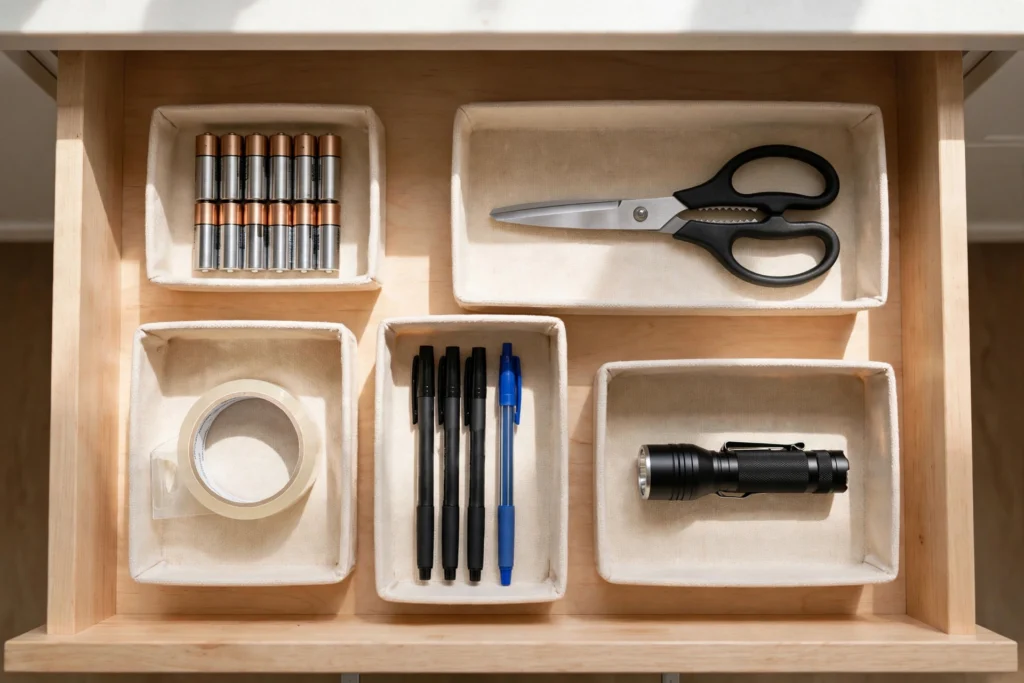
Every home has a drawer where batteries, rubber bands, mystery keys, and takeout menus go to die. Dump it all out, wipe the drawer clean, and be ruthless:
- Trash: dried-out pens, dead batteries, expired coupons, manuals for things you no longer own
- Keep: one set of batteries, scissors, tape, a flashlight
- Relocate: tools to the toolbox, office supplies to the desk
Add a small drawer organizer if you can — a $5 tray is the difference between a junk drawer and a utility drawer.
4. Expired Medicines & Old Toiletries
Where: Bathroom cabinets, medicine cabinet
Time: 10 minutes
Expired medications don’t just lose effectiveness — some become unsafe. Check every bottle. Same for toiletries: that sunscreen from two summers ago won’t protect you, and old mascara (older than 3 months) is a bacterial playground.
Safety note: Don’t flush medications. Most pharmacies take back expired drugs — check yours. It’s the safest disposal method.
5. Clothes You Haven’t Worn in a Year
Where: Closets, dressers
Time: 20 minutes
The one-year rule is cliché because it works. If you haven’t worn it in 12 months — through every season — you’re keeping it out of guilt, not need. Be honest about:
- “Someday” clothes (wrong size, waiting for an occasion that never comes)
- Stained, stretched, or pilled items you’ll never actually wear out of the house
- The 47 t-shirts from events and freebies
Exception: True occasion wear (one formal outfit) and genuine sentimental pieces — keep a small box for those, not a whole closet.
6. Mismatched Socks & Old Bed Linens
Where: Bedroom, linen closet
Time: 10 minutes
The lonely sock phenomenon is universal. If a sock has been single for more than a month, its partner isn’t coming back. As for linens: frayed sheets, lumpy pillows (older than 2 years — they’ve collected a shocking amount of dust mites), and towels that no longer absorb water.
Rule of thumb: Two full sheet sets per bed is plenty. Towels: two per person, plus two guest towels. Everything beyond that is storage you’re paying rent for.
7. The Paper Pile
Where: Countertops, desk drawers, that basket by the door
Time: 15 minutes
Paper is the cockroach of clutter — ignore it for a week and it multiplies. Sort into:
- Shred/Recycle: old bills (you can access them online), junk mail, expired warranties, manuals (they’re all online now — seriously, recycle them)
- File: tax documents, medical records, home/car paperwork — one small folder is enough
- Action: the 2-3 things that actually need doing this week
Go paperless where you can: switch bills to e-statements and take a photo of receipts you need to keep.
8. Expired & Unused Makeup
Where: Bathroom drawer, makeup bag
Time: 10 minutes
Makeup has a shorter life than most people think: mascara 3 months, liquid foundation 6-12 months, lipstick about a year. Old products can cause breakouts and eye infections. Toss anything that smells off, has changed texture, or you simply never reach for.
Keep the test: If you had to buy it all again today, would you? If not, out it goes.
9. Kids’ Outgrown & Broken Toys
Where: Playroom, kids’ bedrooms
Time: 20 minutes (involve the kids!)
Kids outgrow toys faster than seasons change. Broken toys with missing pieces, puzzles with half the pieces gone, and anything they’ve ignored for months — let it go.
The trick that works: Do this with your kids and give them a “donate box” they decorate themselves. Kids who choose what to give away feel generous, not deprived. Keep the favorites, donate the rest.
10. Kitchen Gadgets You Never Use
Where: Kitchen cabinets, drawers
Time: 15 minutes
The avocado slicer. The banana hanger. The third spatula. If you haven’t used it in the last 6 months, it’s decoration — expensive, space-hogging decoration. Keep the workhorses (good knife, cutting board, one spatula, one wooden spoon) and release the rest.
The box test: Still unsure? Put questionable items in a box, date it, and store it out of sight. If you don’t open the box in 30 days, donate the whole thing unopened.
What to Do With It All (Don’t Just Make New Piles)
Decluttering fails when the “donate” bags sit in your hallway for three months. Finish the job the same weekend:
- Donate: Good-condition clothes, toys, linens, and kitchenware → local charity shops or shelters (call ahead — many do pickup)
- Sell: Higher-value items → list them within 48 hours or donate them. A “sell pile” with no deadline becomes permanent clutter.
- Recycle: Electronics, batteries, and paint → check your city’s hazardous waste drop-off days
- Trash: The genuinely broken and expired — let it go without guilt
Schedule the drop-off NOW. Put it in your calendar before you close this tab. The number one reason decluttered items creep back into the house is that the donation run never happened.
How to Keep It This Way
Here’s the truth no one tells you: decluttering is a weekend project, but staying decluttered is a system. Three habits that actually work:
- One in, one out. New shirt? An old one leaves. New kitchen gadget? One goes. This single rule prevents 90% of re-clutter.
- The 10-minute nightly reset. Set a timer, whole family, 10 minutes — everything goes back where it belongs. It’s shocking how much 10 minutes covers.
- A seasonal mini-declutter. Every 3 months, do a quick pass of just one category (clothes in spring, papers in summer…). Twenty minutes, four times a year, and you’ll never need a massive purge again.
Weekly cleaning schedule for busy moms — our upcoming guide pairs perfectly with this checklist: 20 minutes a day and the house basically maintains itself.
Frequently Asked Questions
How long does it take to declutter a whole house?
A focused weekend (4-6 hours total, broken into 15-minute sessions) handles the 10 high-impact areas in this checklist. A full top-to-bottom whole-house declutter typically takes 2-4 weekends at a relaxed pace. Start with this list — the visible wins will motivate you for the rest.
What should I declutter first?
Start with the easiest, most visible wins: expired pantry items, the junk drawer, and old toiletries. These take minutes, require zero emotional decisions, and the immediate visual payoff builds momentum for harder categories like clothes and sentimental items.
How do I declutter when I feel overwhelmed?
Shrink the task until it feels silly: “I’ll declutter for just 10 minutes” or “I’ll do just one drawer.” The 15-minute rule in this guide exists for exactly this reason. Momentum is more powerful than motivation — starting small almost always leads to doing more.
Is it better to declutter or organize first?
Always declutter first. Organizing clutter just means buying pretty containers for things you don’t need. Purge what doesn’t belong, then organize what’s left — you’ll need fewer bins, less space, and less money.
What do I do with sentimental items I can’t let go of?
Keep them — but contain them. Designate one beautiful box for sentimental items. When it’s full, something must leave for something new to enter. This honors the memories without letting them colonize your closets.
Your Free Declutter Checklist Printable
Want this whole list as a pretty printable you can stick on the fridge?
Download the free Weekend Declutter Checklist →
Print it, check things off as you go, and enjoy that deeply satisfying feeling of a lighter home. And if this weekend reset sparked something — our Ultimate Home Management Binder (coming soon to the shop) takes this system and runs with it: cleaning schedules, maintenance trackers, and room-by-room plans for the whole year.
Happy decluttering!