

Kitchen Declutter Checklist: 15 Things to Toss for a Calmer Kitchen
The kitchen is where clutter hits hardest. It’s the room you walk into half-asleep for coffee, the room guests see first, and — if you’re honest — the room where “I’ll deal with it later” goes to live forever.
Here’s the good news: kitchens respond to decluttering faster than almost any room in the house. Clear 15 targeted spots and the whole house feels calmer, because the kitchen is the heartbeat of daily life. You don’t need a weekend. You need 20 minutes a day for a week — or one satisfying hour today.
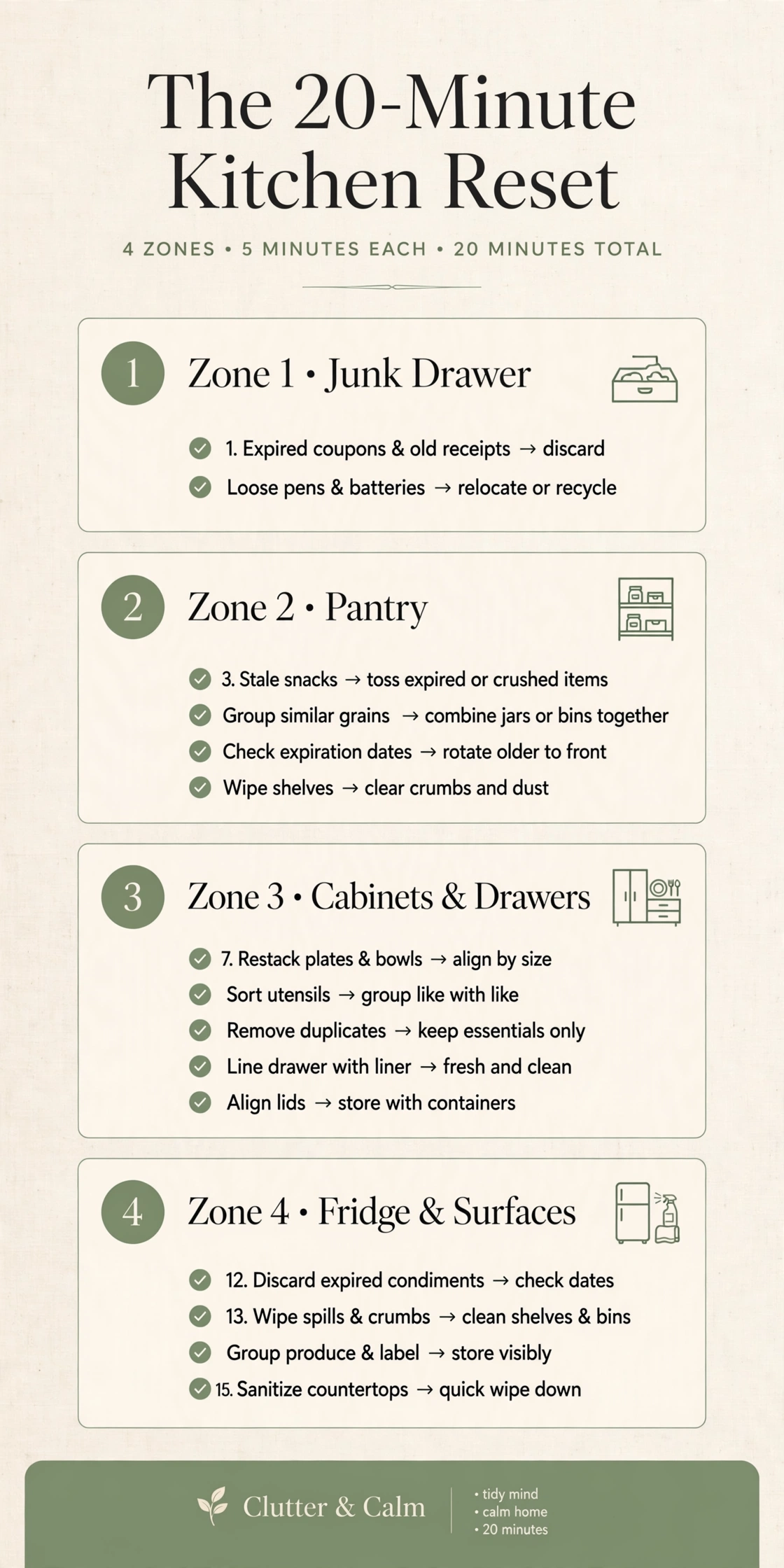
Grab three bags (trash, donate, relocate) and work this list top to bottom. Each item has a time estimate so you can knock out a few whenever a gap appears in your day.
The 20-Minute Kitchen Reset: How It Works
Before you start, the rules:
- Work in zones, not drawers. Finish one zone before opening the next. The kitchen is a domino problem — half-finished zones create more chaos than none at all.
- Touch everything once. Pick it up, decide: keep, toss, donate, relocate. No “maybe” piles. “Maybe” is just clutter with a permission slip.
- Countertops last. Clear the hidden zones first (drawers, cabinets, pantry). Countertops are the reward — they stay clear naturally once everything else has a home.
Tip: Play a 20-minute timer playlist. When the music ends, you stop. A finished zone beats an ambitious, abandoned kitchen every time.
Zone 1: The Junk Drawer (Items 1–2)
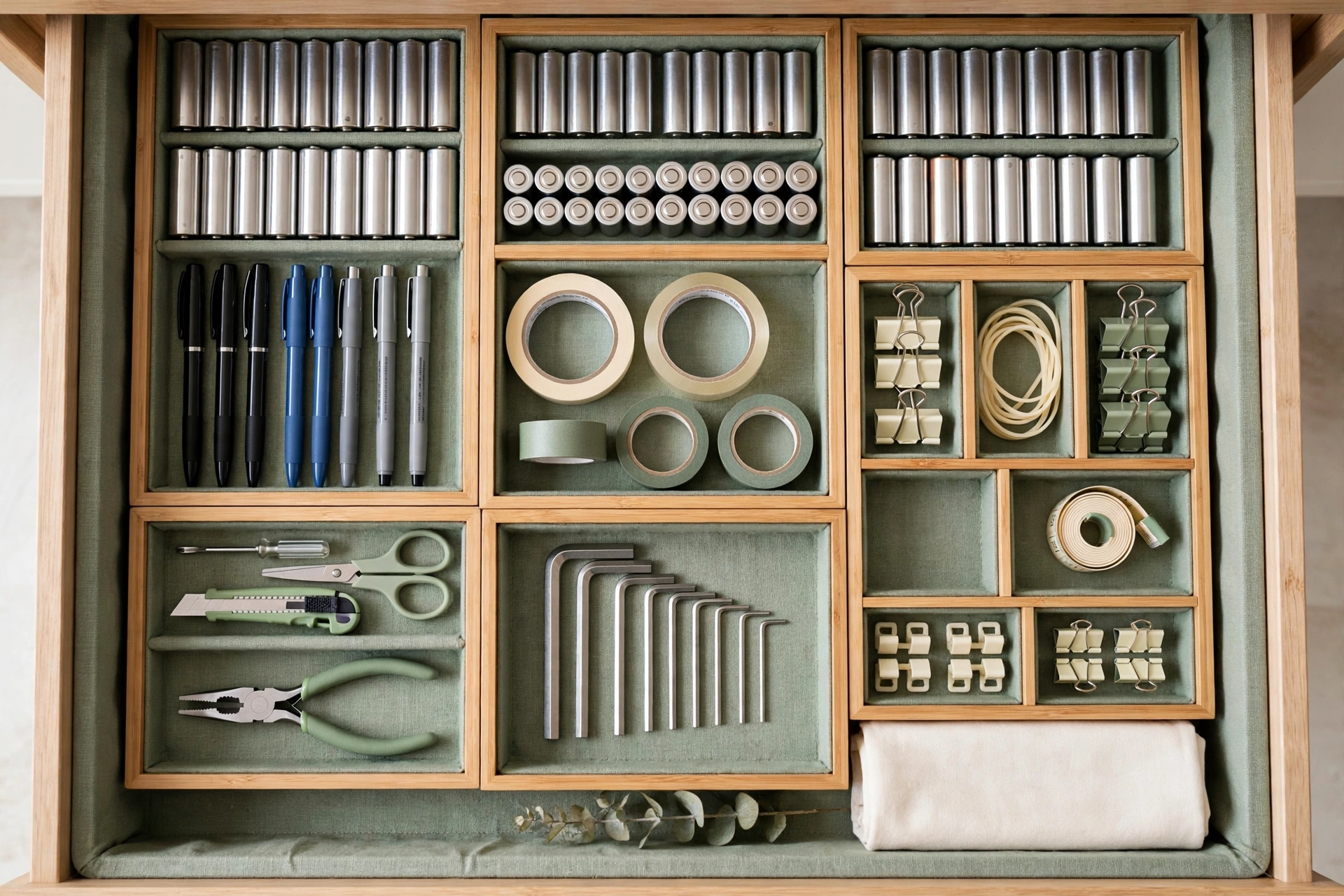
1. The Dead-Battery Graveyard
Time: 5 minutes
Every junk drawer has one: loose batteries of unknown age, a flashlight that hasn’t worked since 2022, chargers for phones you no longer own. Test the flashlight. Toss batteries that are corroded or ancient (recycle them — batteries don’t belong in landfill). Keep one working flashlight, one multi-charger, and that’s it.
Rule: If you need a battery and this drawer is your plan, the plan has already failed. Keep batteries in one small labeled pouch — not scattered.
2. The Takeout Condiment Museum
Time: 5 minutes
Soy sauce packets from 2021. Three ketchup sachets. A dried-out sweet-and-sour container. Plastic cutlery bundles, rubber bands, twist ties, and the mysterious key nobody can identify. This is the easiest win in the entire kitchen: it’s almost all trash.
Keep: one small handful of napkins, one set of emergency chopsticks, one good pen. That’s the whole drawer inventory.
Zone 2: The Pantry (Items 3–6)
3. Expired Spices and Baking Supplies
Time: 10 minutes
Ground spices lose their punch after 6–12 months; baking powder dies after about a year. Smell-test anything you haven’t touched in a while — no scent, no mercy. That half-used box of cornstarch from a 2023 recipe experiment? It has retired.
Rule: Write the purchase month on new spice lids with a marker. Future-you will thank present-you.
4. Duplicate Staples and Half-Empty Bags
Time: 10 minutes
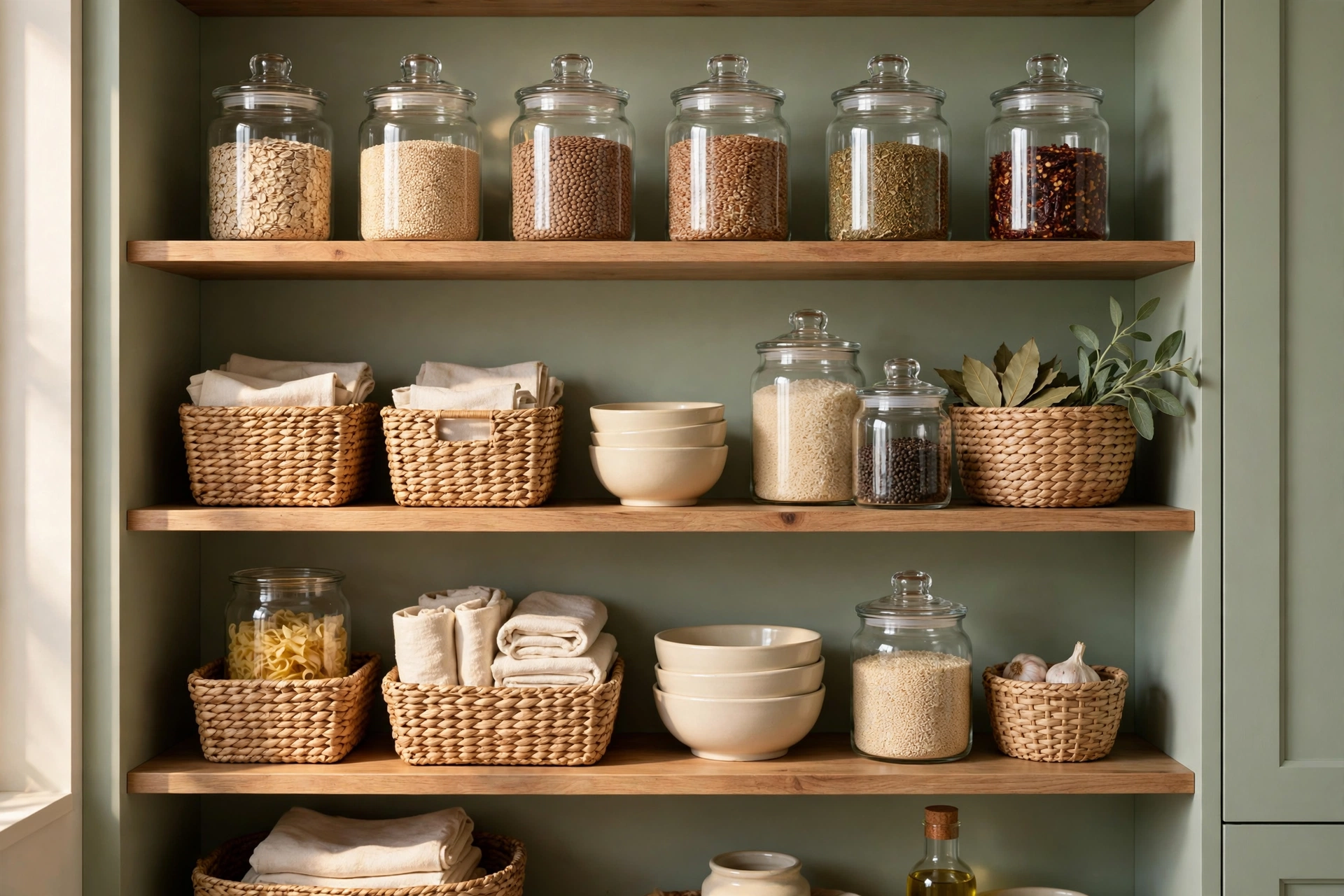
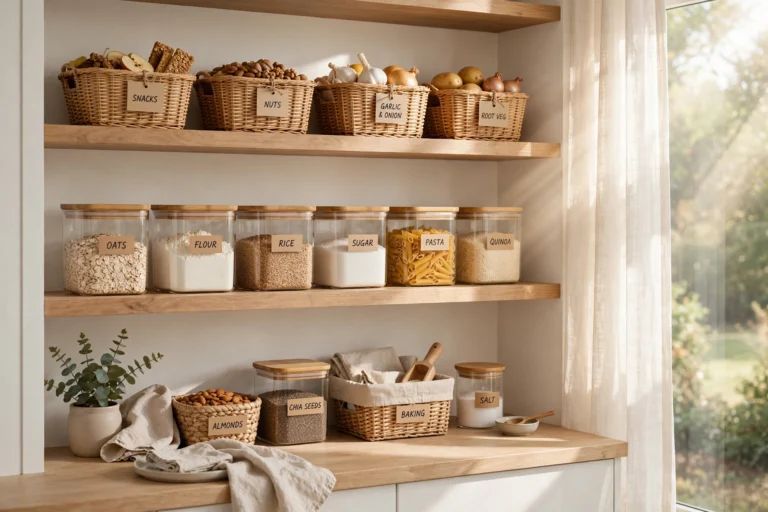
Three open bags of rice. Two half-used flour sacks. Four different pastas, each with a sad handful left. Consolidate: merge matching items into clear jars or one bag, and make a “use first” shelf for the stragglers. This one move can free an entire shelf.
5. Canned Goods Past Their Prime
Time: 5 minutes
Check dates — not just year, month. Bulging or rusted cans go straight to trash. Cans within a few months of expiry go on a “cook this week” list. Pro tip: if you’re heading into the holidays, this is the perfect time to clear space for holiday cooking ingredients.
6. Gadgets You Don’t Use
Time: 5 minutes
The bread maker from the 2020 era. The spiralizer. The single-purpose avocado slicer that takes up the same space as a knife. If it hasn’t been used in 6 months and it’s not a holiday-only item (looking at you, roasting pan), donate it. Someone else will actually spiralize.
Zone 3: Cabinets and Drawers (Items 7–11)
7. Mismatched Mugs and Chipped Dishes
Time: 10 minutes
The chipped mug with the wobbly handle. The promotional tumbler from a conference. The lidless travel cup. Keep the mugs you genuinely love — most households need about 2 per person, not 14. Chipped dishes are a safety issue; let them go.
Rule: The “one in, one out” rule works beautifully here. New mug arrives? One leaves.
8. Plastic Containers Without Partners
Time: 10 minutes
The universal kitchen tragedy: lids with no containers, containers with no lids. Match them up once. Anything without a partner goes. Then switch to one nesting set and donate the rest — mismatched plastic chaos is a solved problem.
9. Duplicated Utensils
Time: 5 minutes
Four spatulas, three ladles, two potato mashers, a drawer of wooden spoons. Keep the best of each category, donate the duplicates. You do not need backup wooden spoons. Nobody needs backup wooden spoons.
10. The “Just in Case” Appliance Graveyard
Time: 10 minutes
That yogurt maker. The popcorn popper. The second blender “for smoothies.” Appliances you keep “just in case” are paying rent in your cabinets for a scenario that never happens. If you haven’t used it in a year, it goes — donate to someone who’ll actually make yogurt.
11. Cookbooks You Never Open
Time: 5 minutes
Be honest: when was the last time you cooked from a physical cookbook? Keep the two or three you actually treasure (grandma’s recipe book stays forever). The rest — the diet-phase books, the bread book, the one you bought for the photos — donate. Recipes live on your phone now, and that’s fine.
Zone 4: The Fridge and Surfaces (Items 12–15)
12. Expired Condiments
Time: 10 minutes
Salad dressing from 2024. The mysterious jar with no label. Five mustards, two of them open. Pull everything out, check dates, wipe the shelf while you’re in there. This is oddly satisfying — one of those tasks that makes you feel like a different person.
13. Fridge Magnets and Paper Clutter
Time: 5 minutes
Expired coupons, old takeout menus, the school flyer from September, a magnet for a business that closed. Keep the current school calendar and emergency numbers; photograph anything sentimental and recycle the paper. A clean fridge front makes the whole kitchen look 30% calmer. (Roughly. Science is pending.)
14. Countertop Appliances You Don’t Use Daily
Time: 10 minutes
The coffee maker earns its spot. The toaster, probably. But the stand mixer you use monthly? The air fryer you forgot about? Store rarely-used appliances in a cabinet or pantry. Countertops are workspace, not appliance parking. Clear counters are the single biggest visual upgrade in any kitchen.
15. The Mail-and-Keys Drift Zone
Time: 5 minutes
The kitchen counter is where mail, keys, sunglasses, and receipts go to multiply. Install a small tray or wall hook by the door instead — one designated “landing pad” for daily items. Process the paper pile: recycle, file, or photograph-and-shred. Future mail lands in the tray, never on the counter.
The Maintenance Routine: Keeping It Clear
Decluttering is the easy part — staying clear is the system. Three habits that make this reset permanent:
- The nightly 5-minute sweep. Before bed, clear counters, wipe one surface, toss one expired item. Tiny, daily, non-negotiable.
- The grocery rule. Something new comes home → something old leaves. New spice jar? Old one gets used or tossed.
- The seasonal check. Every fall and spring, run this checklist again. It takes half the time the second round — and with the holidays coming, a calm kitchen now means a calm December.
If you loved this checklist, our fall declutter checklist takes the same 20-minutes-a-day approach to the whole house before the holidays — and our weekend declutter guide is perfect if you want to keep the momentum going room by room.
Frequently Asked Questions
How long does it take to declutter a kitchen?
A full kitchen declutter takes most people 3–5 hours spread over a week if you work in 20-minute sessions. This checklist is organized into zones so you can finish one zone at a time and see real progress daily — most people feel a difference after just the junk drawer and pantry.
What should I declutter first in a kitchen?
Start with the junk drawer and expired pantry items. They’re fast, require zero emotional decisions, and build momentum. Save sentimental items (grandma’s dishes, recipe cards) for last, when your decluttering muscles are warmed up.
How do I keep my kitchen decluttered long-term?
Three habits: a nightly 5-minute counter sweep, a “one in, one out” rule for new items, and a seasonal re-check every fall and spring. The goal isn’t perfection — it’s a kitchen that recovers from chaos in minutes instead of weekends.
Should I declutter before or after organizing?
Always declutter first. Organizing clutter just gives chaos nicer containers. Remove what you don’t need, then organize what stays — you’ll buy fewer organizers and everything will fit better.
What do I do with good items I don’t want?
Donate in good condition to local charities (kitchens get raided by donation centers before the holidays — your timing is perfect), sell small appliances on local marketplaces, and recycle batteries and electronics properly. Expired food goes to compost or trash, not donations.



8 Comments