
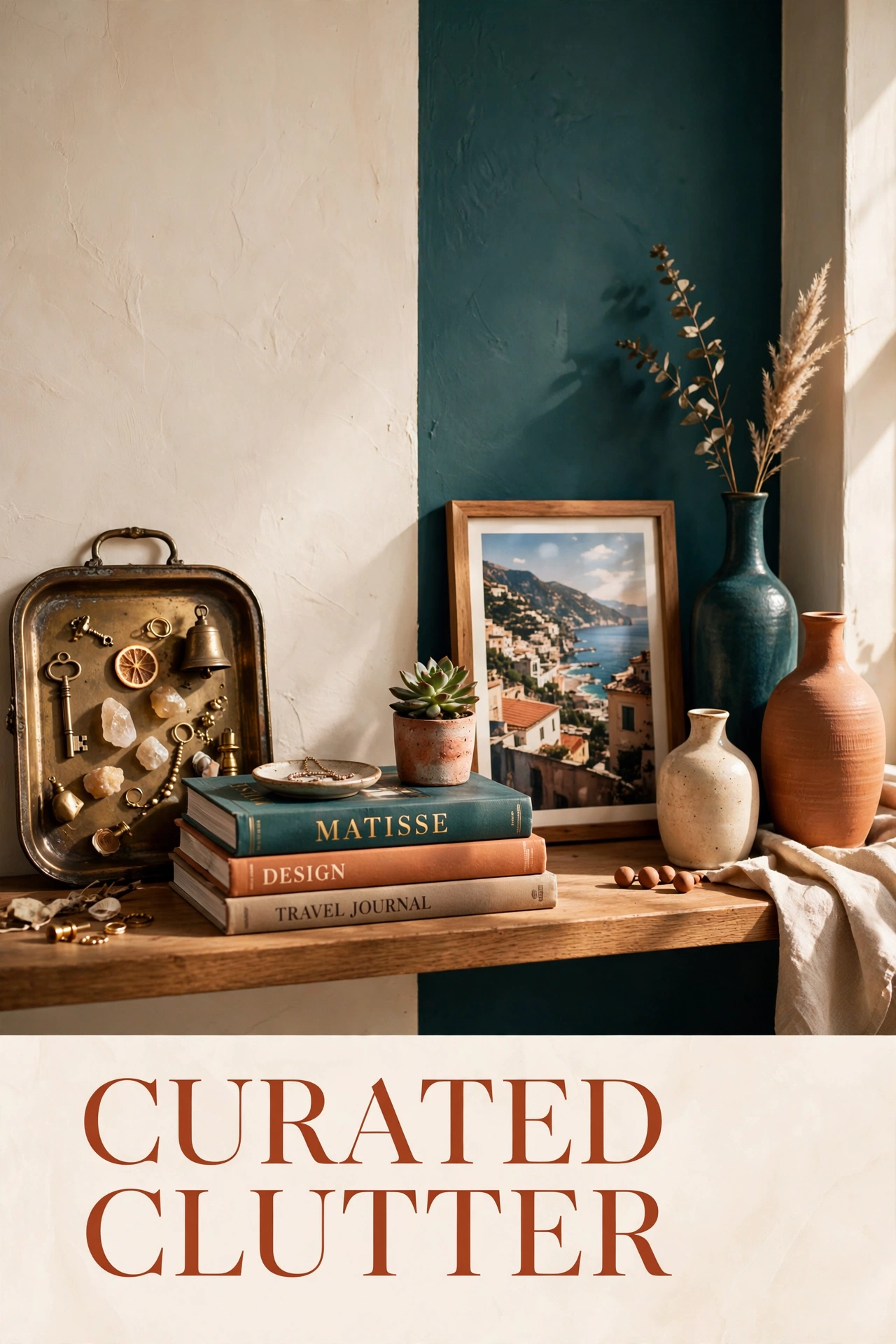
Curated Clutter: Pinterest’s 2026 Trend — Style Your Collections Like a Designer
For ten years the internet said less is more. Pinterest’s 2026 Hobbies Trends Report says curated clutter is taking over — collections styled into “styled identity statements.” The vintage cameras, travel souvenirs, vinyl records — not clutter anymore, personality displayed on purpose.
What Is Curated Clutter, Exactly?
It’s the happy medium between minimalism and mess. Here’s what separates the styled from the strewn:
- Every object earns its spot by meaning something to you.
- Collections are grouped and styled, not scattered across surfaces.
- There’s a vessel — a tray, a shelf, a shadow box — holding it all together.
- It rotates seasonally, so displays always feel fresh.
The one-line test: if a guest asks “what’s the story here?” and you light up — that’s curated. If you want to apologize — that’s clutter.
Why Minimalism Lost (The Psychology)
Minimalism promised calm through emptiness, but empty white rooms feel sterile, not serene. Homes crave personality — the objects that say who lives here. Curated clutter is maximalism with intention: every piece chosen, placed, and given room to breathe. It’s the same philosophy behind our reverse decluttering method, the companion approach to keeping only what you truly love.
The 5 Rules of Curating Like a Designer
Style your shelves like a designer with these five non-negotiable rules.
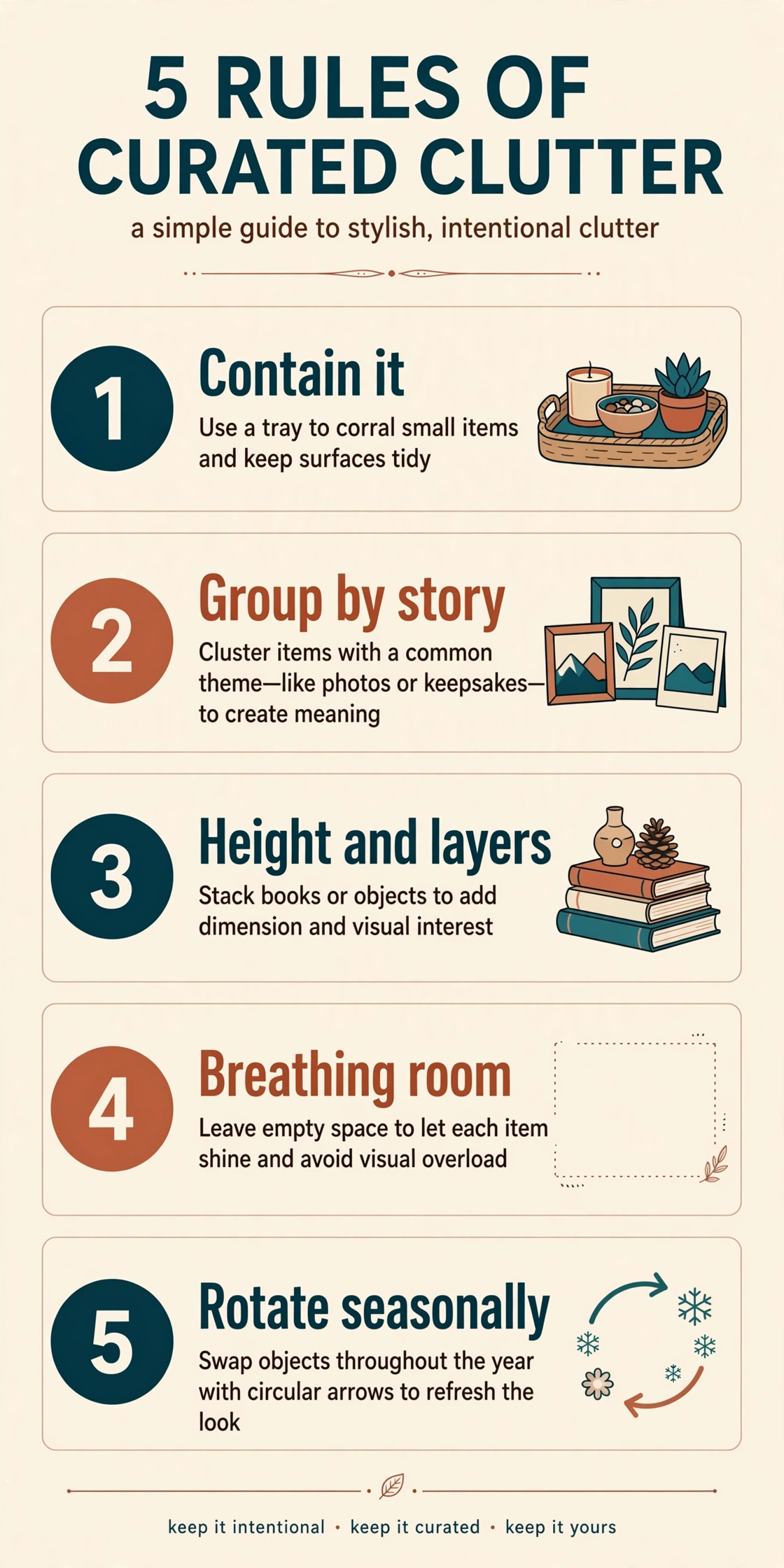
Rule 1: Contain It
Every collection needs a vessel — a tray, a cloche, a shadow box, a shelf. No vessel = clutter. The boundary is what turns a pile into a display.
Rule 2: Group by Story, Not by Type
A shelf of travel memories. A corner of grandmother’s things. Group what means something together, and each vignette tells its own story.
Rule 3: Play with Height and Layers
Use books as risers and arrange objects in triangles — tall, medium, small. Varying heights keeps the eye moving and makes even small collections look styled.
Rule 4: Leave Breathing Room
Keep 20–30% of each shelf empty. Space is the difference between “collected” and “crowded” — it lets every piece be seen.
Rule 5: Rotate Seasonally
Swap your displays quarterly. “Shop” your own storage bins and closets — the novelty keeps your home feeling fresh without buying a thing.
7 Curated Clutter Ideas to Steal
Ready to try it? Steal one of these designer-approved ideas this weekend:
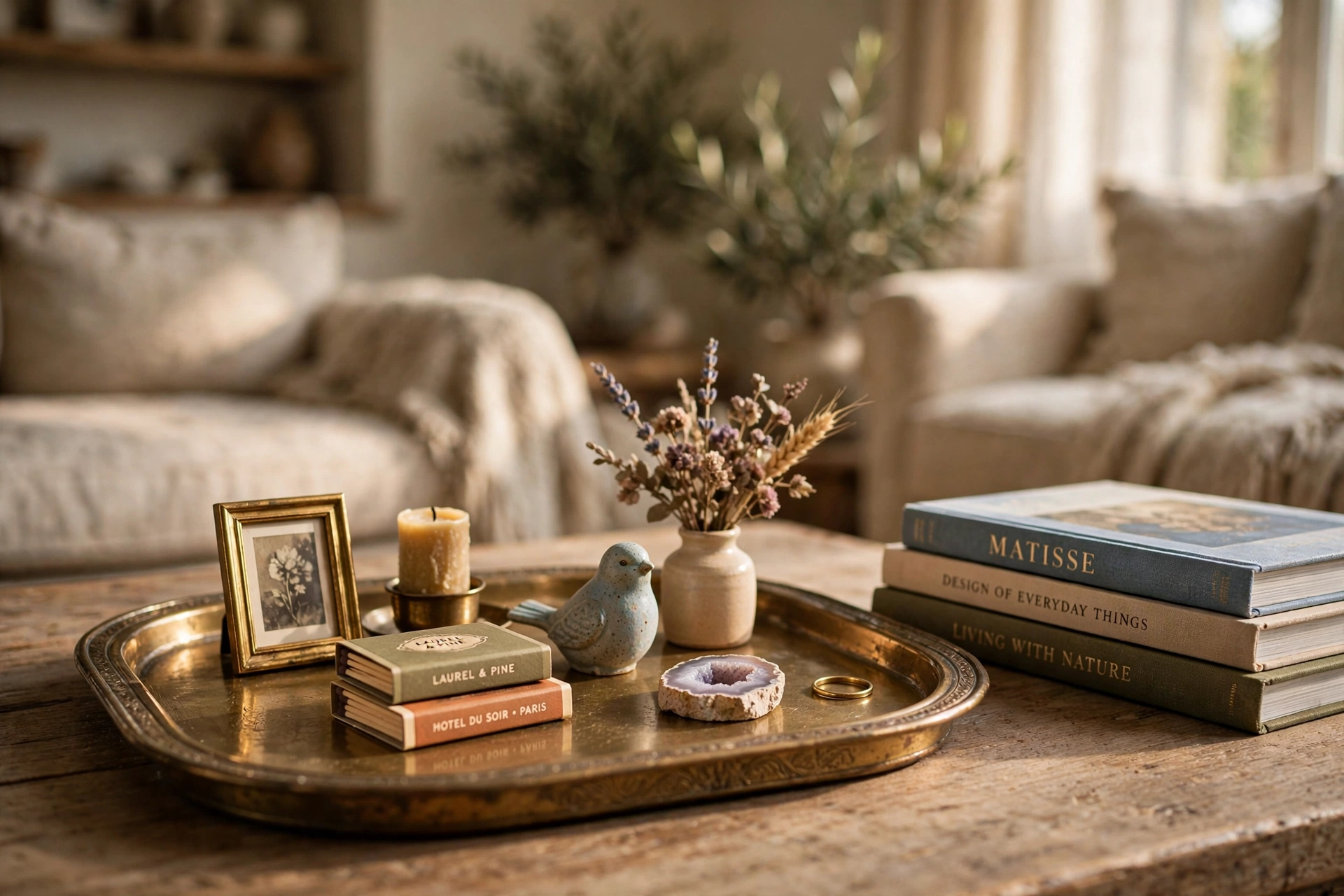
- Vintage tray gallery — a brass tray, 5–7 treasures, styled on the coffee table.
- Plate wall — thrifted plates hung salon-style for instant character.
- Vinyl ledge — 3–4 record covers on a picture ledge, rotated monthly.
- Printer’s tray — $5–15 at any thrift store, perfect for tiny collections.
- Book-stack pedestal — the easiest styled surface in your home.
- Travel shelf — souvenirs, ticket stubs, and a folded map, grouped by adventure.
- Kitchen open shelf — mismatched vintage mugs for instant apothecary vibes.
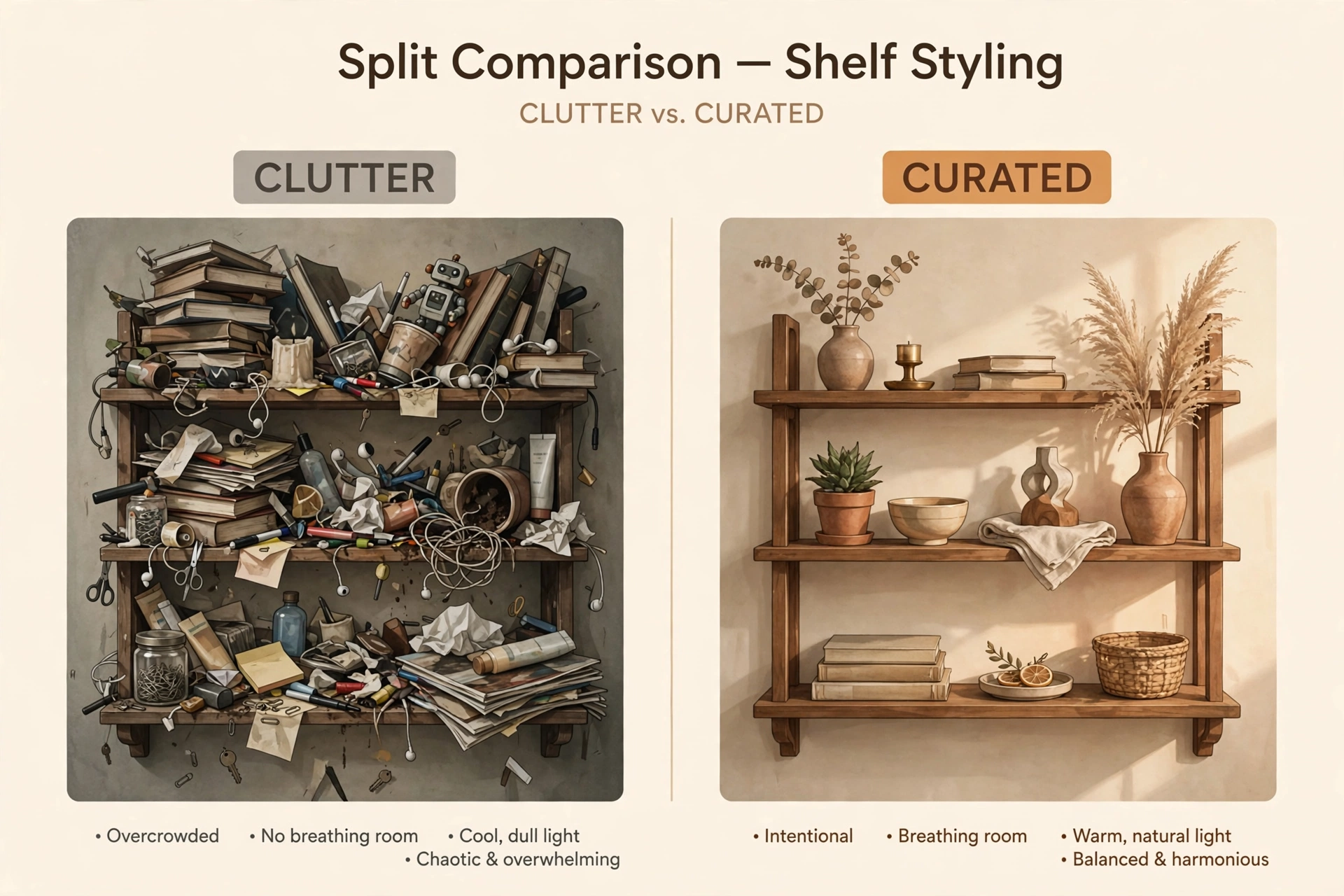
Curated Clutter vs. Regular Clutter: The Checklist
Still not sure which side you’re on? Run your display through these five questions:
- Does everything have a reason to be there?
- Is it contained — does it pass the vessel rule?
- Is there breathing room around the pieces?
- Could you photograph it proudly?
- Can you actually dust it?
Four or five yeses = curated. Fewer than that = time to edit.
How to Start Today (20-Minute Version)
- Pick one surface — a shelf, a tray, a corner of the mantel.
- Clear it completely.
- Choose your 5 favorites from what was there.
- Style them with height variation and breathing room.
- Step back and edit — remove two things.
The removed items go into a box for 3 months. Donate whatever you don’t miss — and photograph anything sentimental first.
Frequently Asked Questions
What is the curated clutter trend?
Pinterest’s official 2026 home trend: intentionally styled collections displayed as “styled identity statements.” Think maximalism with rules — every object earns its place.
Is curated clutter just an excuse for hoarding?
No. Intention and containment separate the two. Run the 5-question checklist above — hoarding has neither intention nor a vessel; curated clutter has both.
How do I start curated clutter in a small space?
Start with one surface, 3–5 objects, some height variation, and breathing room. Rotate seasonally so it never feels crowded.
What should I do with items that don’t make the cut?
Box them for 3 months and donate what you don’t miss. Photograph sentimental pieces first. Our weekend declutter guide walks you through the process room by room.
Does curated clutter work with kids or pets?
Yes — curate higher and sturdier. Use wall shelves and shadow boxes, and let the vessel rule do the heavy lifting: trays corral small treasures safely out of reach.
Curated clutter proves you don’t have to choose between a calm home and a personal one. Start with one shelf this weekend — and if you’re craving a seasonal reset first, our fall declutter checklist will help you make room for the pieces you love most.


4 Comments